
International teachers choose the UK education system for its structured training, clear pay scales and nationwide support.
But what if you’re already a qualified teacher overseas? Do you need to retrain? Can you find a school willing to sponsor your visa? And what kind of support can you expect when you arrive?
The answers depend on your qualifications and experience.
In this guide, we’ll look at why teachers choose England, the routes you can take to qualify and how to find a teaching job that fits your background.
Why Teaching in the UK Appeals to International Teachers

We already mentioned the benefits. Now, let’s look at them in more detail.
Clear Salary Scales and Career Progression
Teaching in England comes with published salary scales, so you can get an idea of what you’ll earn before accepting a job. That makes it easier to compare teaching positions and plan your finances before moving to a new country like the UK.
But salary isn’t just about your first paycheque. As you gain experience, you can progress up the pay scale and take on roles with greater responsibility.
For example, experienced teachers can move into positions such as head of department or senior leadership. You can also explore mentoring roles if you enjoy helping other teachers develop their classroom skills.
This gives you a clearer picture of how your teaching career could grow, whether you want to stay in the classroom or eventually move into leadership.
From there, you move up a point each year while you meet the teaching standards. Your first two years run as early career training, with a named mentor and a reduced timetable, set at 10% in year one.
Mentoring is the part teachers tell us made the difference. It buys you time to learn behaviour policy and marking expectations before the workload climbs.
Structured Training and Professional Support
Moving to a new education system can take some adjustment. You’re learning how schools operate, getting used to different classroom expectations and figuring out what your new employer expects from you.
Teacher training and early career support can help with that transition.
For instance, eligible early career teachers in England receive a structured induction with mentoring and a reduced teaching timetable. This gives you time to develop your classroom practice while learning the school’s policies and routines.
That said, the support you need depends on your experience. If you’ve already taught overseas, you might not need to repeat your initial training. You could qualify through a different route, depending on your qualifications and teaching experience.
Opportunities in Subjects Facing Teacher Shortages
Over the years, we’ve placed hundreds of teachers across the UK. And one thing worth looking at when you’re planning your move to England is your subject specialism.
Why? Because some subjects are harder for schools to recruit teachers for than others.
Maths, physics, computing and modern foreign languages are among the subjects to investigate. If you’re qualified to teach one of them, you could find opportunities in schools looking for teachers with your skills.
Of course, a shortage doesn’t guarantee you’ll land a job. You’ll still need the right qualifications and experience for the role. But knowing where schools need teachers can give you a better starting point for your job search.
Which Teacher Training Routes Can Help You Qualify?
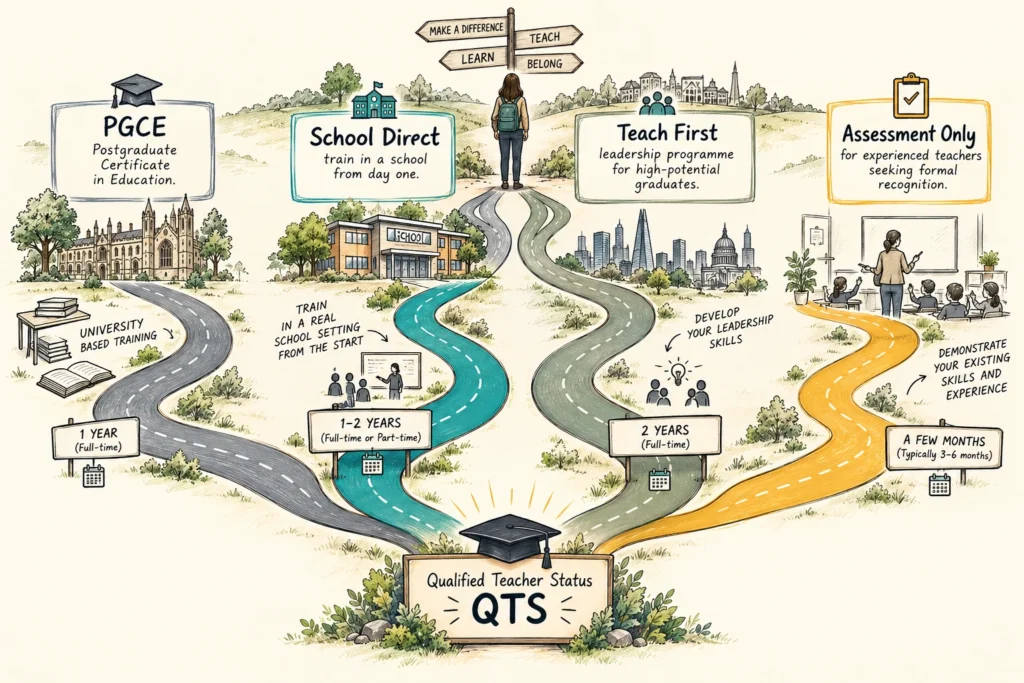
The right teacher training route depends on your qualifications, classroom experience and whether you already have Qualified Teacher Status (QTS). Anyway, here are the main routes available and who each one suits.
Postgraduate Certificate in Education (PGCE)
A Postgraduate Certificate in Education (PGCE) combines academic study with practical teaching experience. It’s a popular option for graduates who want to enter the teaching profession through an initial teacher training programme.
However, not every PGCE qualifies you to teach in English schools. Some programmes award both a PGCE and QTS, while others award the PGCE alone. Check which qualification a course offers before applying, particularly if you plan to teach in England, where QTS is generally required for teaching in maintained schools.
You’ll also need to confirm the course’s entry requirements and whether you’re eligible to enrol as an international applicant.
School Direct
School Direct is a school-based teacher training route that lets you learn in a working school environment.
You’ll spend time developing your classroom skills while receiving guidance from experienced teachers. Depending on the programme, you may follow a fee-funded or salaried route.
But the salaried option isn’t open to everyone, and availability varies. So check the requirements carefully before deciding whether this route fits your qualifications and financial circumstances.
School-Centred Initial Teacher Training (SCITT)
If you want to build your teaching skills through hands-on classroom experience, a School-Centred Initial Teacher Training (SCITT) programme could be a good fit.
You’ll train in a school or partnership of schools rather than spending most of your time in a university setting. As with other training routes, make sure the programme leads to QTS and that you meet its entry requirements.
Assessment-Only QTS
Already have substantial teaching experience? You may not need a traditional training course.
The assessment-only route allows eligible experienced teachers to demonstrate that they meet the standards for QTS without completing a full initial teacher training programme.
You’ll need to provide evidence of your teaching practice and meet the relevant entry requirements. An approved provider will assess whether your experience and skills meet the required standards.
This route isn’t suitable for every experienced teacher, so contact an approved provider to discuss your background before applying.
Other Training Options
School-based training isn’t your only option. Depending on your circumstances, you could explore teacher apprenticeships or other approved programmes that lead to QTS.
The important thing is to choose a route that matches your existing qualifications rather than applying for the first programme you find.
And before committing to a course, check the academic entry requirements, tuition fees and qualification it awards. If you earned your degree overseas, ask the training provider whether your qualifications meet its requirements.
You can also use the government’s guidance for overseas-trained teachers to check whether you’re eligible to apply for QTS through the recognition service.
Finding Teaching Jobs in Schools Across England
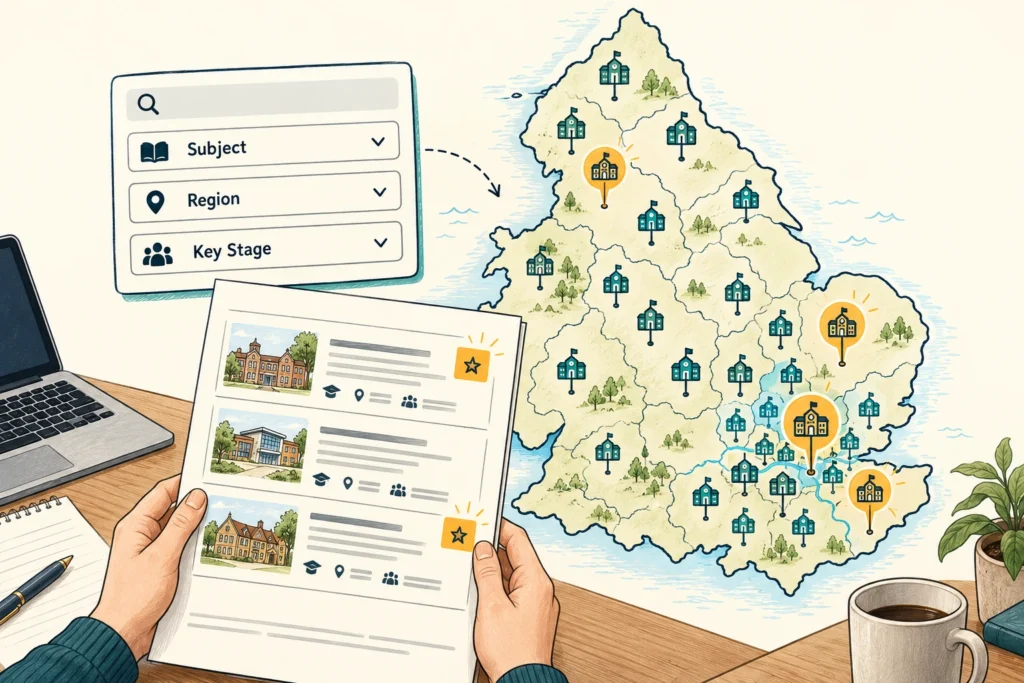
Once you know which qualification route fits your background, you can start looking for schools that are hiring.
You don’t have to search blindly, either. Official services can help you find vacancies, compare opportunities and get advice about entering the profession. We’ve listed the most popular ones below.
Search Teaching Vacancies
The Department for Education’s Teaching Vacancies website lets you search for teaching jobs in schools and colleges across England.
You can filter listings by location, subject and working pattern to narrow down the options. Just make sure to read each job description carefully to check the qualifications, experience and other requirements. You don’t want to go to an interview only to find out you don’t meet the requirements.
And if you need visa sponsorship, confirm that the employer can sponsor eligible applicants before investing too much time in the application process.
Search School and Academy Trust Websites
Many schools and academy trusts post job openings directly on their websites. Just visit the websites of schools you’d like to work at and look for their careers or vacancies pages. This way, you can find opportunities that are not listed on job boards.
Visa Sponsorship and Entry Requirements for International Teaching Jobs
Finding a suitable teaching job is one part of the process. You also need to make sure you meet the relevant immigration, qualification and safeguarding requirements.
Sorting these out early can help you avoid spending time on applications that aren’t a good fit.
Check Whether the School Can Sponsor Your Visa
If you need a Skilled Worker visa, you’ll need an eligible sponsoring employer and a job that meets the applicable immigration requirements.
Not every school or teaching vacancy will qualify. Before applying, check the employer’s sponsorship arrangements and whether the position meets the relevant salary and occupation requirements.
You can find official information about the visa process on the UK government’s Skilled Worker visa page.
Don’t assume that securing QTS automatically gives you the right to work in England. Your teaching qualifications and immigration status are separate issues, and you’ll need to meet the requirements for both.
Prepare Your Documents
Schools and training providers may ask for documents to verify your qualifications, experience and suitability for the role.
Depending on your circumstances, these could include:
- Your degree certificates and teaching qualifications.
- Evidence of your teaching experience.
- Proof of English-language proficiency, where required.
- References and the checks needed to work with children.
- Documents required for your visa application.
The exact requirements depend on the employer, training route and immigration process. Check the relevant guidance before applying, and allow time to obtain documents from your home country if necessary.
Confirm Your Route to Qualified Teacher Status
QTS is an important qualification for many teaching roles in England, but overseas-trained teachers don’t all follow the same route.
If you’ve already qualified as a teacher abroad, check whether you’re eligible to apply for QTS through the government’s recognition service. Eligibility depends on the applicable requirements and your country and circumstances of training.
If you don’t qualify through that route, you may need to consider an approved teacher training programme instead.
Start with the official QTS guidance for overseas-trained teachers. It explains the recognition route and the alternatives available to teachers who don’t meet its criteria.
Take the Next Step Towards Teaching in the UK
Now, over to you. Do you think the opportunities and benefits of teaching in England make it worth the move? Let us know in the comments.
And if you’re ready to explore teaching opportunities in England, SCE Lamp Exchange can help. We place overseas teachers in early years, primary, secondary and special educational needs roles across England. Get in touch to discuss your experience and find out which opportunities might suit you.